My name is Luca Kasumovich and I’d like to welcome you to my site.
I’d like to tell you a little about how this project was born,
Night time photography has been a passion of mine since I was in 6th grade, and since then I’ve found one thing very annoying about nighttime photography, light pollution. In fact, I urge you to ask anyone who is a nighttime photographer what annoys them about it, I guarantee light pollution is on their list.
But one thing about me is that I’m persistent, I don’t stop until I get answers.
The result of that work is the basis of this website. I wanted to share it in a way that would be visually compelling and easy to read, especially for someone who is being introduced to these concepts for the very first time. And so, I present to you: Light Pollution for Dummies.
The basics:
The Oxford Dictionary defines light pollution as: “the brightening of the night sky caused by street lights and other man-made sources, which has a disruptive effect on natural cycles and inhibits the observation of stars and planets”.
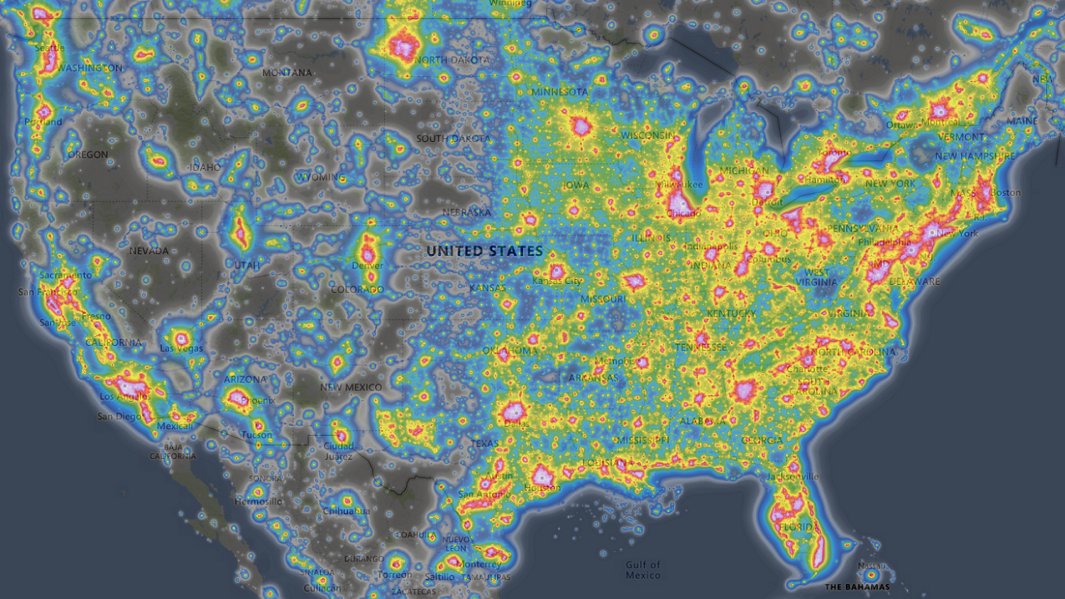
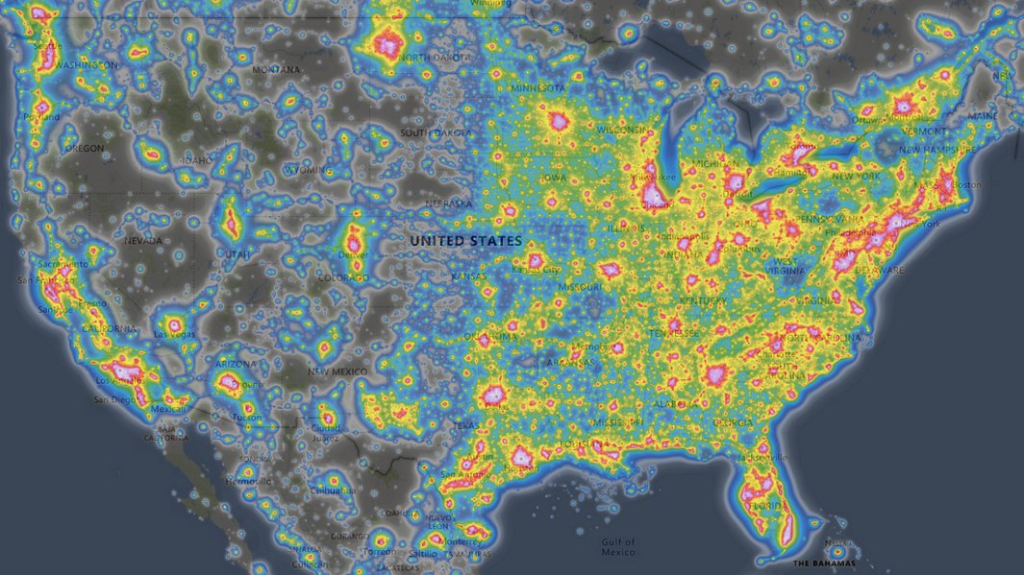
If the effects of light pollution make sense to you, do me a favor, and pretend they don’t. I say this because it is hard to truly grasp the extent to which light pollution may be affecting things like our circadian rhythms, which some people refer to as their internal clock, over any period of time because we simply do not know what we do not know. Cycles of alertness and sleepiness based on the amount of light or darkness in our environment are an integral part of a natural process that affects almost all living things, including animals, plants, and microbes. The same is true with our limited access to observing the night sky that is caused by too much light in our environment. It’s just the way it is, and most people living in or around urban settings simply don’t know any better. In fact, it is estimated that 99% of North Americans are affected by light pollution, and over 80% have never seen the Milky Way. Those are both staggering numbers, especially since it hasn’t always been this way. A study published in 2021 by astrophysicst Alejandro Sánchez de Miguel estimated that in the past 25 years, light pollution has increased 270% worldwide and up to 400% in specific regions.
Yet, despite this steady progression, light pollution is often brushed away as a “fact of life” for many, and as a result, gets little to no attention. There are all kinds of pollution that are wreaking havoc on our planet and, in turn, on the lives of its inhabitants, and those issues absolutely deserve our attention. However, light pollution is basically rewiring our natural cycles and disrupting our body’s natural ability to regulate itself, and it is spreading its reach as quickly as we are developing. That’s why one of my objectives for Light Pollution for Dummies is to raise awareness about this important topic. Let’s dive right in!
Spot the Difference
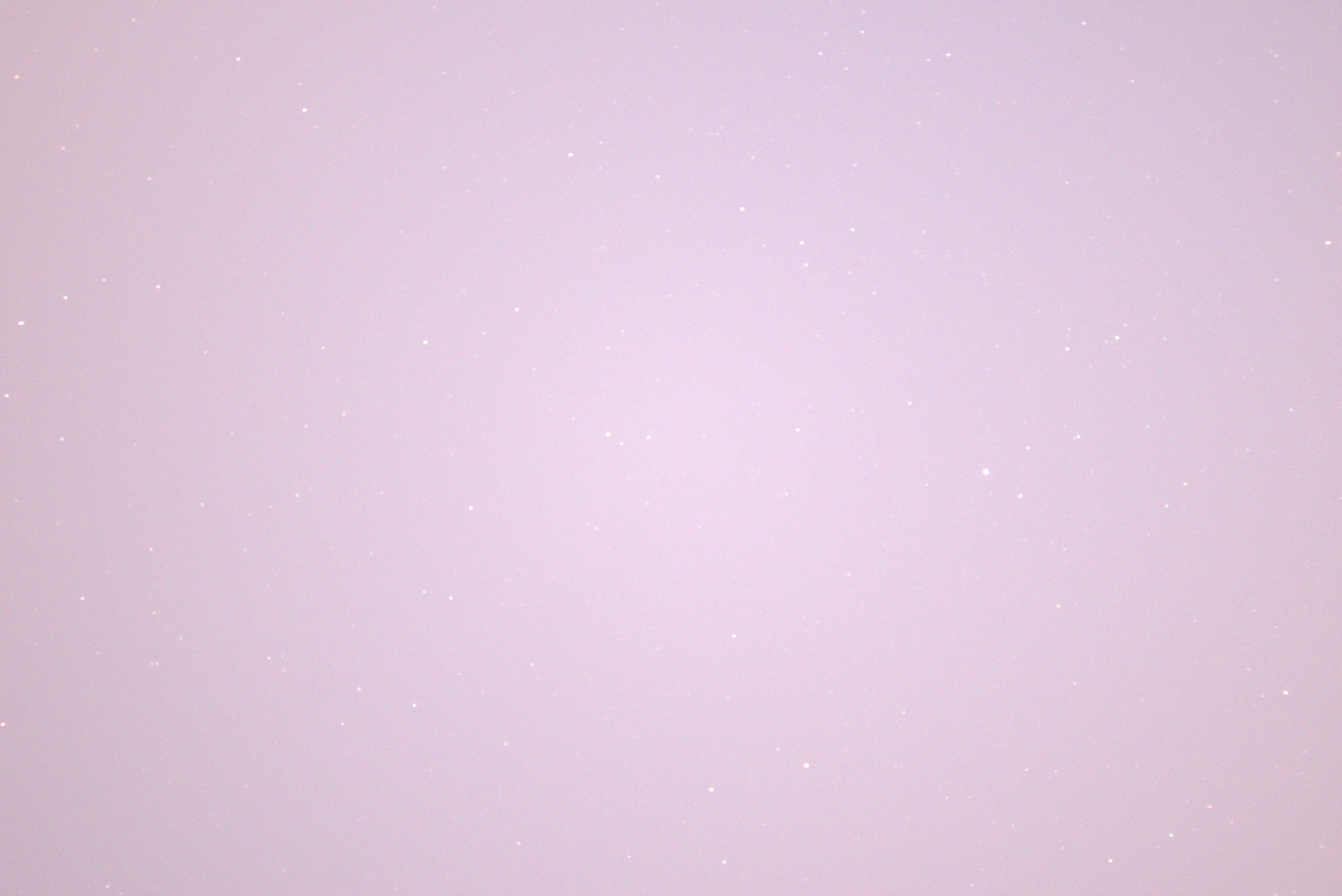
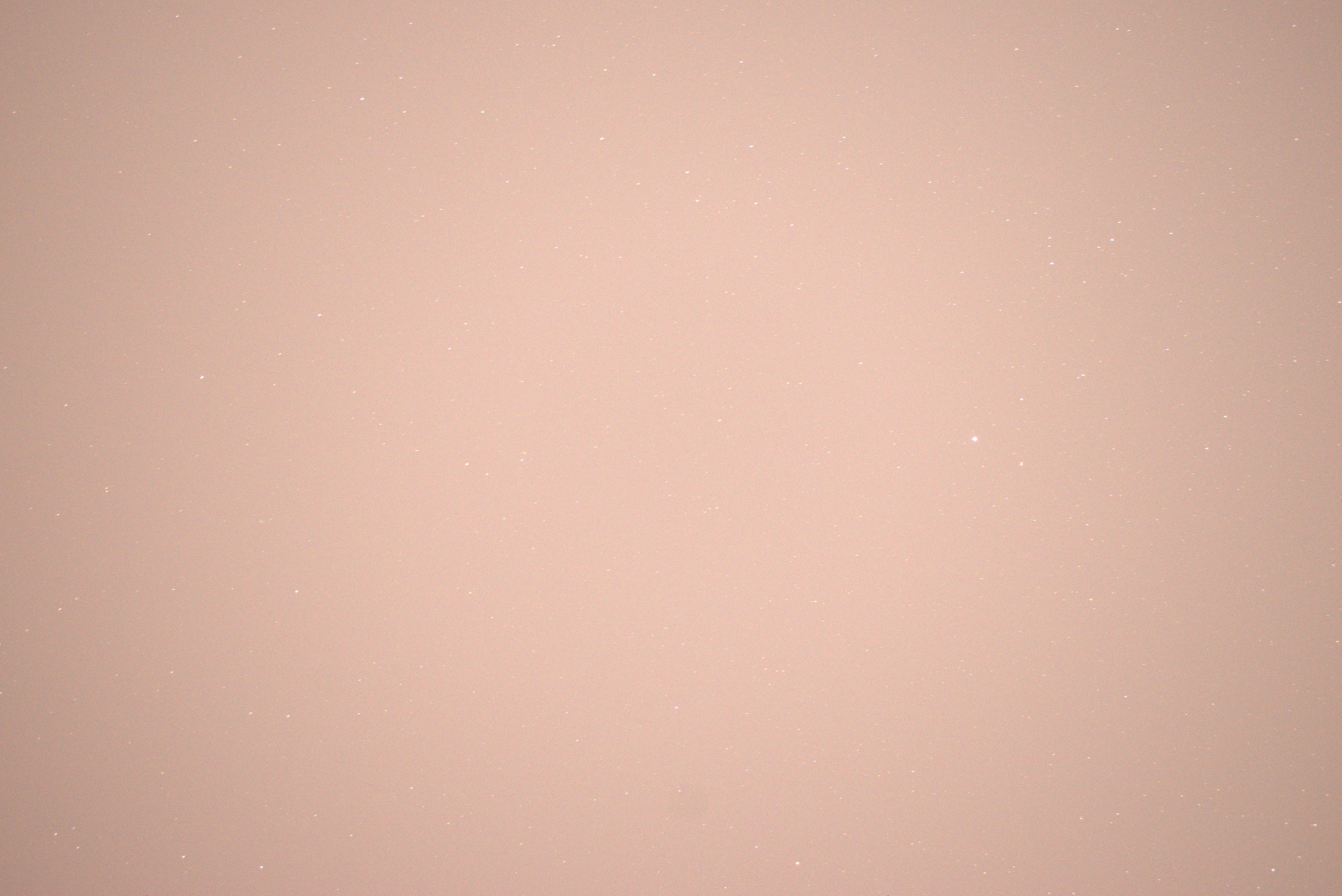
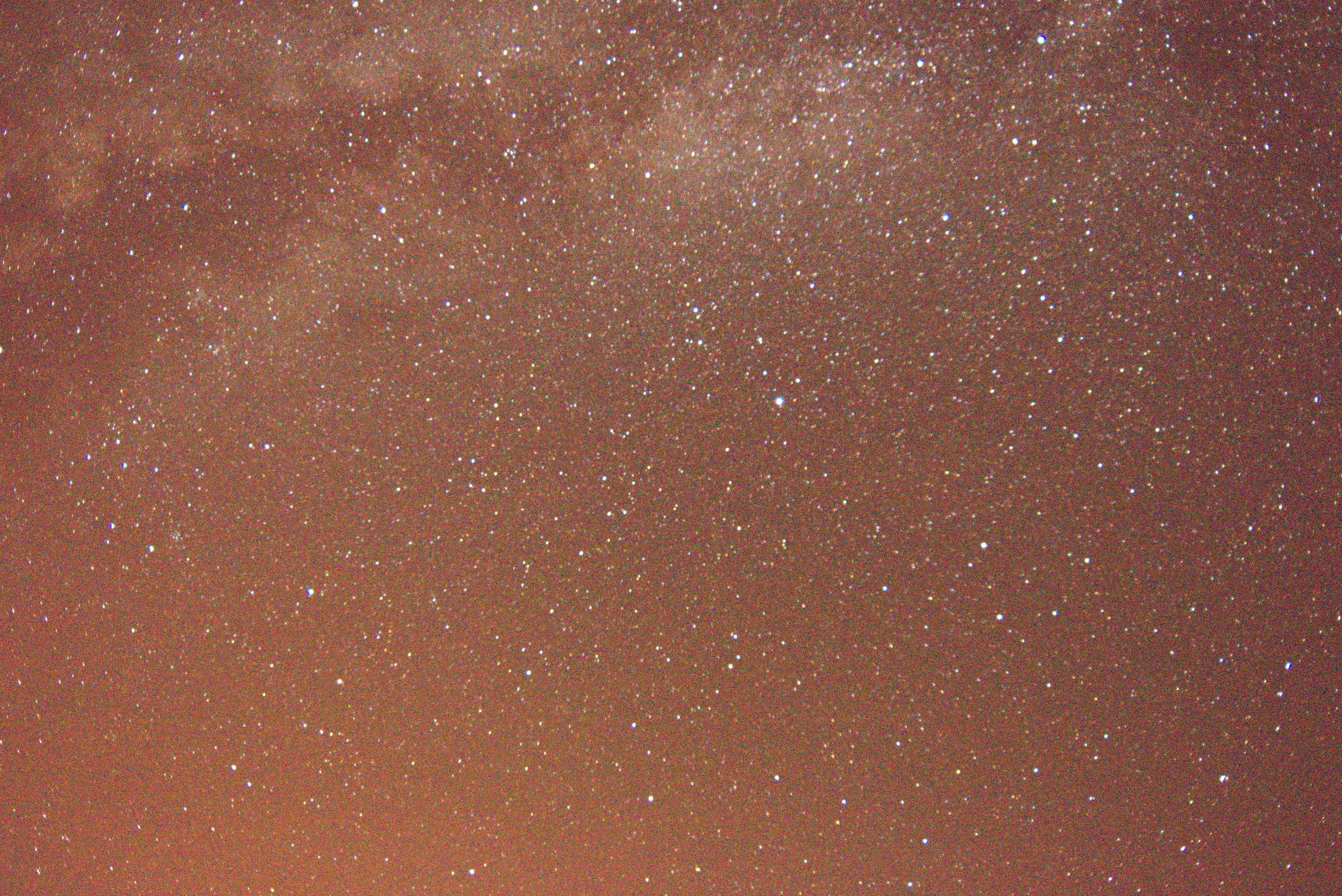
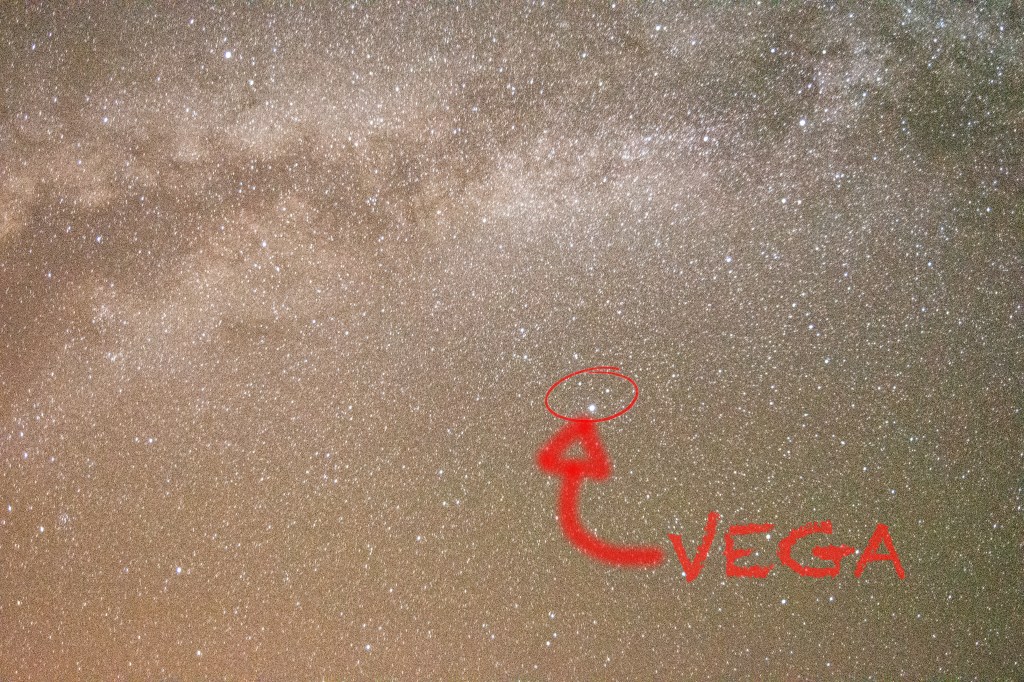
Presented next to you are photos from different locations in this order: Downtown in a city, in a park near downtown, and rural. It shouldn’t be too tricky, but try and spot the differences between the three locations. Notice not only the changes in the sheer amount of stars visible but also the color of the sky. Although the third picture stands out much more than the first two, the first two photos still have many differences, although being taken within miles of each other.
The Star of The Show… (Literally)
Vega.
Vega is the 5th brightest star in the night sky, the brightest star in the constellation Lyra. Circled in the photos presented is what is known as the summer triangle; it is made up of the stars Altair, Deneb, and Vega (Vega being the brightest one). Although the name may throw you off, the summer triangle is visible in the northern hemisphere for the vast majority of the year and gets its name from being most visible during summer months. Because of its vast visibility, vega and the summer triangle make a great comparison point for different levels of light pollution.
Light pollution is complicated…
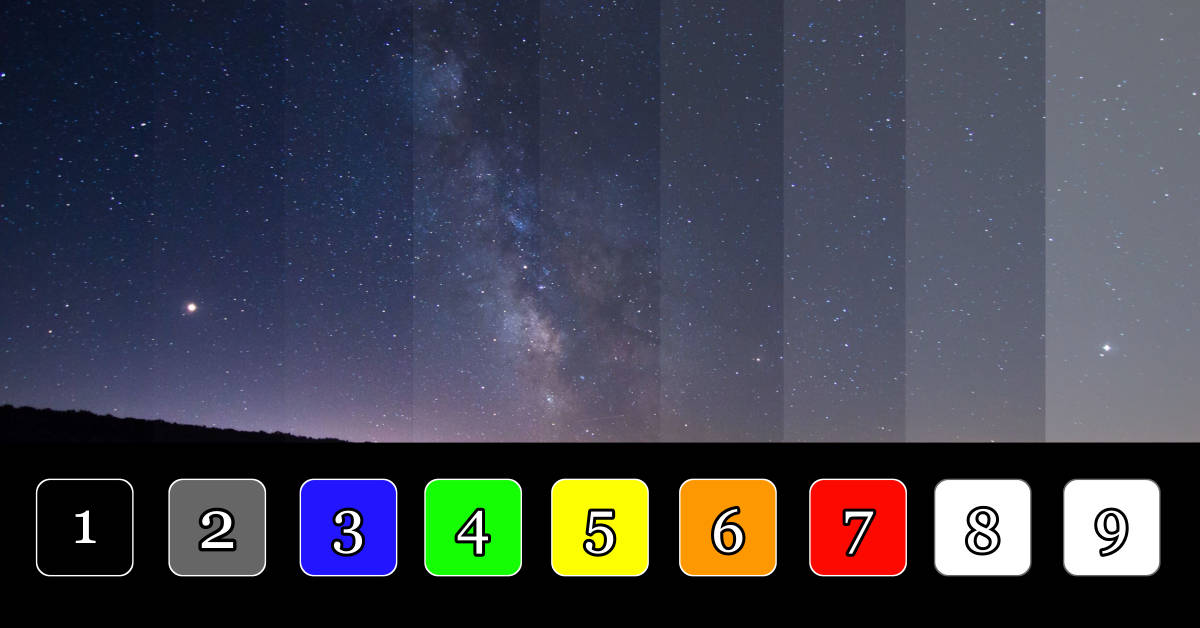
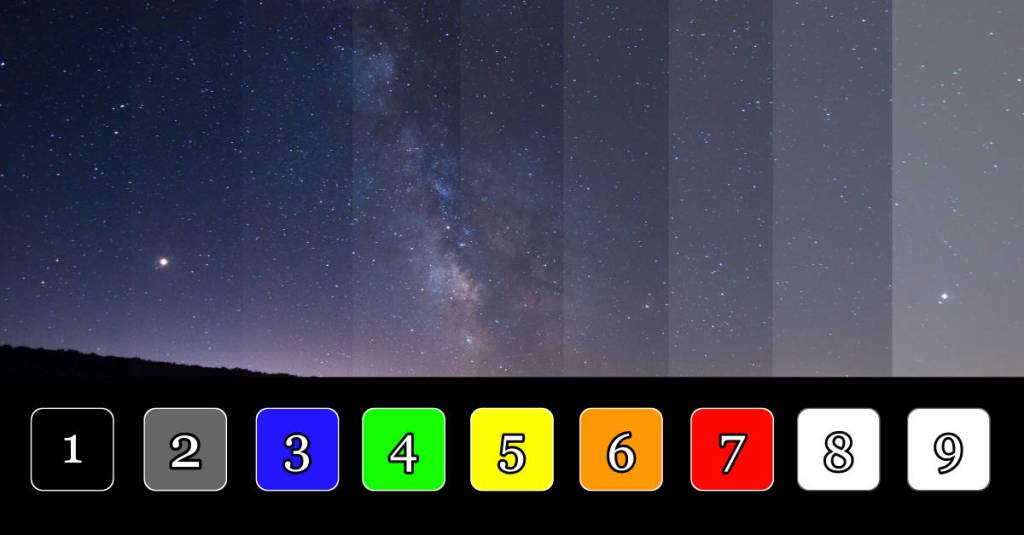
Although one may debate otherwise, light pollution is complicated. That is the reason why, in 2001, an amateur astronomer by the name of John E. Bortle created a scale to help other astronomers compare night sky darkness. His scale has become the benchmark for measuring light pollution; it is known as the Bortle scale. The Bortle scale is very simple; it “is a nine-level numeric scale that measures the night sky’s and stars’ brightness of a particular location.” Level 1 is the darkest skies on Earth, gradually building up to level 9 being the brightest, with every location on Earth falling somewhere on this scale. Although this may not be the most accurate way possible to measure and compare light pollution levels, its simplicity, and practicality are what have allowed it to become the most widely used measure of light pollution, and it sure does make thinking about light pollution a lot less complicated.
Taking Things a Step Further
The Bortle scale is a great way to measure light pollution levels in specific places. However, when the Bortle scale is used alongside a map, it not only shows how vast light pollution spreads but also shows the contrary, how we can prevent light pollution from spreading. On the maps presented of Toronto, the Bortle scale in downtown is 8-9, meaning the worst possible, but the Bortle scale in the urban park is 2-3 levels lower than in downtown. Although this difference may not seem like much this effect is continued the larger the protected dark sky area potentially having a instrumental impact.
The Future:
In North America and other developed countries/continents, our lifestyles demand that there be light after dark so we can live, work, study, exercise, play and travel at our convenience. Imagine an airport that operated only during daylight hours or an apartment building that required us to read by candlelight once the sun sets. It sounds like something out of a dystopian movie.
The truth is we are literally lost without artificial light. The vast majority of city dwellers have no idea how to navigate direction by the position of the sun or the constellations in the night sky. And since modern society will not be bound by a curfew set by when the sun rises and sets, we of course have GPS on our phones and lights on the street that show us the way.
In countries with emerging development, like India or Kenya, the trend is for society to become more urbanized as the economy grows. With that growth comes opportunity, as the population that once lived more rurally begins to congregate in the city centers, which soon become densely populated and ultimately leads to an increase in light population for that region.
In fact, research shows that light pollution levels continue to rise globally every year. Put simply, light pollution is here to stay and so are all of its side effects. By obscuring our ability to view the night sky with massive amounts of artificial light, we are altering the cycles of our natural world and ecosystems, which consequently has a negative impact on our ability to regulate our sleep patterns, our internal clocks and even our moods. This can contribute to higher levels of stress, anxiety, insomnia and other disorders/illnesses.
So the question is: What, if anything, can be done to reduce the impact light pollution has on our planet, and by extension, our lives?
Urban planners and government have an important role in helping to reduce the spread of light pollution, the most straight forward way to reducing the spread of light pollution is to increase protected dark sky areas. According to backroadpackers.com there are currently 60 International Dark Sky Association-designated places across the USA, these include communities, national parks, and reserves. Expanding the amount of Dark Sky designated places will prevent further development in these areas and allow people to see the night sky in all it’s glory within reach of any major city in the country.
It is essential to realize that light pollution isn’t going anywhere, more and more people in the USA and Canada are moving from rural to urban places as there is simply more opportunity in cities and with this light pollution will naturally expand. But we can prevent where light pollution goes by protecting more places from development to preserve the natural night sky.

Works Cited
Astronomy, Go. “DARK SKY PARKS & SITES | Light Pollution Maps | 2023 List | GO ASTRONOMY.” Go-Astronomy.Com, https://www.go-astronomy.com/dark-sky-sites.php. Accessed 15 Oct. 2023.
“Bortle Dark-Sky Scale.” Wapps.Umt.Edu, https://wapps.umt.edu/winapps/media2/wilderness/toolboxes/documents/night/Bortle%20Dark-Sky%20Scale.pdf. Accessed 15 Oct. 2023.
“Dark Sky Parks.” NASA Earth Observatory – Home, https://earthobservatory.nasa.gov/images/84722/dark-sky-parks. Accessed 15 Oct. 2023.
“Find Summer Triangle • Quick & Easy • Everything You Need to Know!” Arabian Nights, https://www.facebook.com/arabiannightsrum/, https://arabiannightsrum.com/stars/summer-constellations/triangle/#:~:text=The%20Summer%20Triangle%20can%20be,be%20visible%20overhead%20in%20October. Accessed 15 Oct. 2023.
Greenfieldboyce, Nell. “Light Pollution Hides Milky Way From 80 Percent Of North Americans, Atlas Shows.” NPR, 10 July 2016, https://www.npr.org/sections/thetwo-way/2016/06/10/481545778/light-pollution-hides-milky-way-from-80-percent-of-north-americans-atlas-shows.
“Growth of Light Pollution – Night Skies (U.S. National Park Service).” NPS.Gov Homepage (U.S. National Park Service), https://www.nps.gov/subjects/nightskies/growth.htm. Accessed 15 Oct. 2023.
“Light Pollution Map.” Light Pollution Map, https://www.lightpollutionmap.info/. Accessed 15 Oct. 2023.
Sánchez de Miguel, Alejandro, et al. “Remote Sensing | Free Full-Text | First Estimation of Global Trends in Nocturnal Power Emissions Reveals Acceleration of Light Pollution.” MDPI, Multidisciplinary Digital Publishing Institute, https://www.mdpi.com/2072-4292/13/16/3311/htm. Accessed 15 Oct. 2023.
“Vega.” Encyclopædia Britannica, Encyclopædia Britannica, https://www.britannica.com/place/Vega-star. Accessed 15 Oct. 2023.
“Where to Find the Darkest Skies in the USA | The Top 9 Sites for Stargazing | Backroad Packers.” Backroad Packers, Backroad Packers, 16 Apr. 2023, https://www.backroadpackers.com/post/darkest-skies-in-the-usa#:~:text=In%20fact%2C%20the%20United%20States,communities%2C%20national%20parks%20and%20reserves.
 My 3rd Eye